- The Ultimate Platform for Streamer Betting and Esports Duels
Valorant Tracker: How to Read Your Stats and Improve Faster
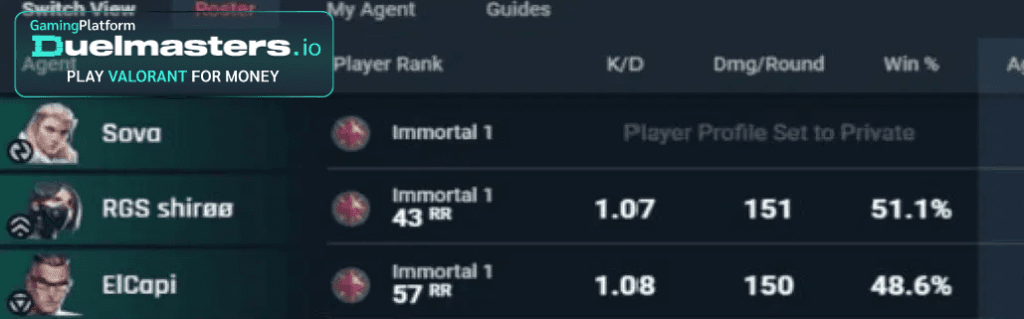
A Valorant tracker helps you understand how you actually play, not just how you feel after a win or loss. It can show your match history, agent performance, headshot percentage, K/D, damage, win rate, maps, weapon stats, and long-term trends. Used correctly, a tracker turns random ranked frustration into clear feedback.
The problem is that many players open a valorant tracker, look at one number, and draw the wrong conclusion. A high K/D does not always mean you are carrying. A low headshot percentage does not always mean your aim is terrible. A strong win rate on one agent may matter more than a flashy scoreboard on another. The goal is not to worship stats. The goal is to understand what your numbers are trying to tell you.
Article content:
- What Is a Valorant Tracker?
- Why Valorant Stats Matter
- Tracker Network Valorant and Public Profiles
- How to Read a Valorant Player Tracker
- The Difference Between Ranked Stats and Esports Stats
- How to Use a Tracker Without Tilting
- Common Mistakes Players Make With Trackers
- What to Improve Based on Your Stats
- Final Thoughts
- FAQ
What Is a Valorant Tracker?
A Valorant tracker is a stats tool that collects and organizes your performance data. Instead of checking only the post-match screen, you can review patterns across many games. That makes it easier to answer practical questions: which agents are working, which maps are weak, whether your win rate is improving, and how your impact changes over time.
A good valorant stat tracker usually shows:
- recent matches;
- competitive rank history;
- K/D and KDA;
- win rate;
- headshot percentage;
- average combat score;
- damage per round;
- agent stats;
- map stats;
- weapon performance;
- leaderboard comparisons.
This is especially useful because Valorant is a tactical shooter, not a pure aim trainer. Your stats should be read in context. A Controller with average kills but strong win rates may be doing more for the team than a Duelist with high kills and poor round impact.
Duelmasters – The Ultimate Platform for Streamer Betting and Esports Duels
Why Valorant Stats Matter
Valorant stats matter because they reveal habits you may not notice while playing. In the middle of a match, emotions are loud. You remember the teammate who whiffed, the enemy who one-tapped you, or the round where you almost clutched. But numbers show the bigger picture.
If your win rate on Split is 38% across 40 matches, that is not bad luck anymore. If your headshot percentage drops heavily on Phantom compared to Vandal, that may show a weapon comfort issue. If your first-death numbers are high on Duelist, you may be entering without trade support. If your best agent has a 62% win rate and your “fun pick” has 43%, the tracker is telling you something.
The best players do not use stats to protect their ego. They use stats to remove excuses.
Duelmasters – Watch Streamers, Predict Results, and Win Real Rewards Instantly
Tracker Network Valorant and Public Profiles
Tracker Network Valorant is one of the most recognized stat-tracking options in the community. It allows players to view profiles, leaderboards, weapon stats, match history, and comparisons with other valorant players. For many people, it is the default place to check Val performance after ranked sessions.
However, privacy matters. Some tracker tools require Riot sign-in or profile access. Before connecting any account, you should understand what becomes public and what data is being shared. A stat site can be useful, but it should not be treated as a harmless toy if you care about profile visibility.
The healthy approach is simple: use a tracker for improvement, but check privacy settings and avoid obsessively monitoring every teammate or opponent.
Duelmasters – Real-Money Esports Betting on Streamers
How to Read a Valorant Player Tracker
A valorant player tracker is only useful if you know what to look for. Beginners often focus on K/D first, but K/D is one of the easiest stats to misread. A player can have a good K/D and still lose important rounds by baiting, saving too often, or refusing to trade. Another player can have a modest K/D but create space, plant spike, delay retakes, and win rounds.
Start with these metrics instead:
Win Rate
Valorant win rates show whether your choices lead to match wins. Overall win rate matters, but agent and map win rates are more useful. If you win 58% of your games on Omen and 42% on Reyna, the data is telling you which role may fit your current style better.
Damage Per Round
Damage per round helps measure consistent impact. A player who deals steady damage every round may be more valuable than someone who gets three exit kills after the round is already lost.
First Kills and First Deaths
These stats are especially important for Duelists and aggressive players. Entry fragging is risky, but repeated first deaths without trades usually damage the team.
Headshot Percentage
Headshot percentage can reveal aim quality, but it depends on weapon choice and role. A Vandal-heavy player may naturally show a higher headshot percentage than someone using Odin, Judge, or Phantom sprays.
Agent Pool
Your tracker may show that you are spreading games across too many agents. That usually slows improvement. A smaller agent pool gives cleaner data and faster progress.
The Difference Between Ranked Stats and Esports Stats
Valorant esports stats are useful, but they should not be copied blindly. Professional players operate inside structured teams. Their agents, utility, timings, and roles are built around coordinated strategies. Ranked is messier. Your teammates may not trade correctly, use utility on time, or follow a default.
That means pro stats can inspire you, but your personal tracker should guide your decisions. If a pro player dominates with Viper on a map, that does not automatically mean Viper will work in your solo queue games. If your own tracker shows a low win rate on that agent, you need to adjust.
The best approach is to combine both views. Use esports data to understand the meta, then use your valorant tracker to see what actually works in your matches.
How to Use a Tracker Without Tilting
A tracker can help you improve, but it can also make ranked more stressful. Some players check every opponent before the match and panic when they see high stats. Others inspect teammates and start judging the game before pistol round. That is the wrong mindset.
A tracker should be used after matches, not as a weapon during agent select. The goal is review, not anxiety.
A better routine looks like this:
- Play a block of three to five matches.
- Open your tracker after the session.
- Check agent win rate, map performance, deaths, and damage.
- Pick one problem to fix.
- Apply that focus in the next session.
Do not try to fix ten things at once. One clear improvement is more valuable than a page full of numbers.
Common Mistakes Players Make With Trackers
The first mistake is treating K/D as the full truth. Valorant is about rounds, not personal score. A player who trades, anchors, smokes, flashes, and plays post-plant correctly may win more games than someone chasing kills.
The second mistake is using tiny sample sizes. A 100% win rate across two games means almost nothing. A 56% win rate across 80 games is much more meaningful.
The third mistake is ignoring map context. You may not be bad at an agent overall. You may be bad with that agent on one specific map.
The fourth mistake is comparing yourself to the wrong players. Radiant stats are not always useful if you are Silver, Gold, or Platinum. Your next step should match your current level.
The fifth mistake is using a tracker to blame others. If every review ends with “my teammates are bad,” you are not using data correctly.
What to Improve Based on Your Stats
Your stats should lead to action.
If your headshot percentage is low, work on crosshair placement and deathmatch discipline. If your damage is low, review positioning and utility usage. If your first deaths are high, stop dry-peeking and coordinate with teammates. If your win rate is low on one agent, either study that agent properly or remove it from your pool. If your map win rate is weak, learn better default positions, defensive setups, and rotate timing.
A tracker Valorant players actually benefit from is not just a scoreboard. It is a mirror. It shows what keeps happening when emotions and excuses are removed.
Final Thoughts
A valorant tracker is one of the best tools for improving faster, but only if you read the numbers correctly. Valorant stats can show your strongest agents, weakest maps, best weapons, and repeated mistakes. Tracker Network Valorant and similar tools make this information easier to review, while valorant esports stats can help you understand higher-level trends.
The key is balance. Do not let a tracker control your mood. Use it to find patterns, make better decisions, and build a cleaner ranked routine. The best players do not just check stats. They turn stats into better habits.
FAQ
What is a Valorant tracker?
A Valorant tracker is a tool that shows performance data such as match history, rank, win rate, K/D, headshot percentage, agent stats, map stats, and weapon stats.
What is the best way to use Valorant stats?
The best way to use Valorant stats is to look for long-term patterns. Focus on agent win rates, map weaknesses, damage per round, first deaths, and consistency across many matches.
What is Tracker Network Valorant?
Tracker Network Valorant is a popular tracking platform that lets players view profiles, leaderboards, match history, and detailed performance stats.
Is a Valorant stat tracker useful for ranked?
Yes, a Valorant stat tracker can be very useful for ranked if you use it to review mistakes and improve habits instead of blaming teammates or obsessing over K/D.
How can I check Val performance after matches?
You can check Val performance by reviewing your match history, agent stats, map stats, weapon stats, and win rates through a tracker or Riot-connected stats tool.
What do Valorant win rates show?
Valorant win rates show how often you win overall, on specific agents, or on specific maps. They are most useful when based on a meaningful sample size.
What is a Valorant player tracker?
A Valorant player tracker shows detailed information about one player’s match history, competitive progress, agents, weapons, maps, and performance trends.
Are Valorant esports stats useful for normal players?
Valorant esports stats are useful for understanding the pro meta, but ranked players should not copy them blindly. Your own tracker data matters more for personal improvement.
Should I use a tracker during agent select?
It is better to avoid judging teammates or opponents too much before the match. Use your tracker mainly after games to review performance calmly.
Can a tracker help me rank up?
Yes, a tracker can help you rank up if you use it to identify weak maps, poor agent choices, repeated deaths, low-impact rounds, and bad habits that are holding you back.