- The Ultimate Platform for Streamer Betting and Esports Duels
Kai Cenat Paris Fashion Week Journal Goes Viral And Sparks Discipline Talk

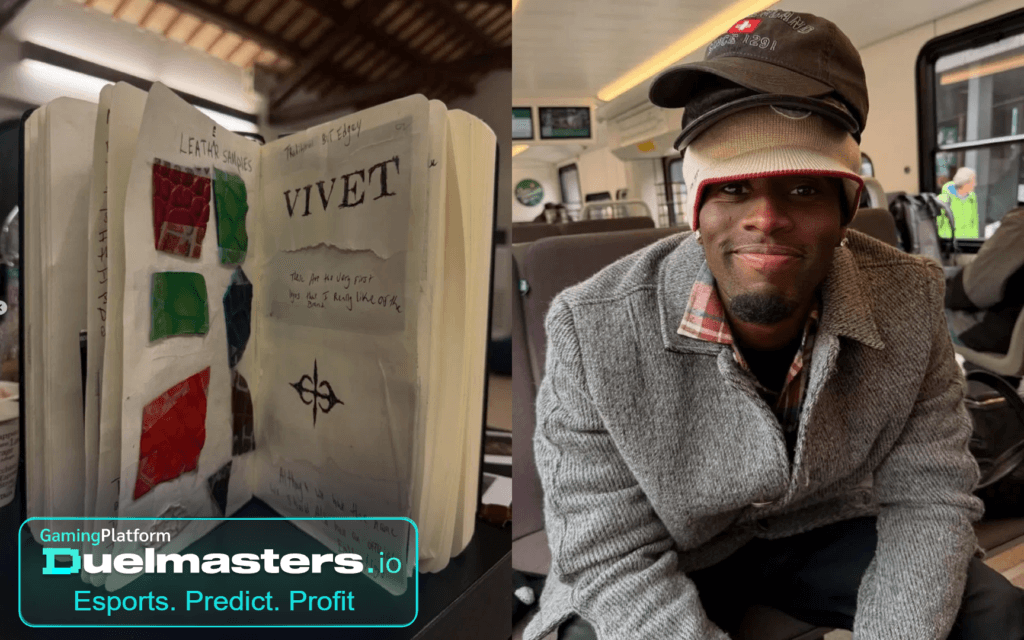
Kai Cenat Paris Fashion Week Journal clips went viral after the streamer appeared at Paris Men’s Fashion Week carrying his notebook from show to show, turning a simple “paper journal” into the main storyline. The moment quickly shifted from “fit check” to a bigger debate about authenticity, discipline, and how top creators now build public personas in real time.
Article content:
- What Happened In Paris And Why The Notebook Became The Story
- Background: Why Kai Cenat Keeps Showing The Journal
- Reactions: Motivation For Some, “Performative” For Others
- Why It Matters For Streamer Culture And The Gaming Media Format
- Duelmasters: Turning Streamer Moments Into Live Bets On Streamer Games
- Conclusion
What Happened In Paris And Why The Notebook Became The Story
Kai Cenat was photographed at the 424 menswear show and later at Louis Vuitton on January 20, 2026, dressed in black and consistently holding the same journal. That repetition mattered. Because the accessory never changed, the internet treated it as intentional messaging, not a random prop.
In the viral framing, the “analog” choice stood out: a physical notebook in a world where creators usually capture ideas on phones. 📒 That contrast helped the clip travel, because it looked like a statement about focus and control.
Duelmasters – The Ultimate Platform for Streamer Betting and Esports Duels
Background: Why Kai Cenat Keeps Showing The Journal
Teen Vogue links the journal to a documented self-development routine. Since December 2025, Kai Cenat has shared reading and writing habits on his side channel “Kai’s Mind,” with a specific goal: speak more clearly and get taken seriously in discussions.
He also tied the habit to his fashion plans. In that context, the journal is not just “a notebook,” but a working place for ideas connected to his upcoming brand, including early concepts and branding notes.
Reactions: Motivation For Some, “Performative” For Others
The reaction split fast. Supporters framed the Kai Cenat Paris Fashion Week Journal moment as a rare public signal of discipline something creators talk about, but don’t always show consistently. Meanwhile, critics argued it felt staged and accused him of “performing authenticity,” with comparisons to other celebrity creatives.
A second wave followed when other creators commented on the backlash itself. Coverage of DDG’s response shows a familiar pattern: when streamers step into fashion, the internet often judges intent as harshly as the product.
Duelmasters – Watch Streamers, Predict Results, and Win Real Rewards Instantly
Why It Matters For Streamer Culture And The Gaming Media Format
This story is not “just fashion.” It’s a clean example of how the biggest streamers now expand their format beyond gameplay, using lifestyle signals that travel well on short video.
Key reasons this trend keeps growing:
- 🎥 Clips reward symbols. A visible object (like a journal) is easier to debate than an abstract mindset.
- 🧠 Discipline content is mainstream. Reading, routines, and journaling now function as “proof of growth,” not private habits.
- 📣 Creators build narrative arcs. Viewers don’t only follow streams; they follow “the next chapter.”
Duelmasters: Turning Streamer Moments Into Live Bets On Streamer Games
That same shift audiences wanting to participate, not only watch shows up in how streaming platforms monetize engagement. Duelmasters positions itself as a creator-driven platform where viewers can place real-money predictions on streamer outcomes in a simple True/False (Yes/No) format, then settle results after community verification.
In practice, this is “bets on streamer games” done around clear, time-bound outcomes (for example, whether a streamer wins the next match). Duelmasters also publishes game-specific guides that frame betting as skill-based and tied to real matches, including Fortnite and EA Sports FC (FC 25 and FC 26).
Duelmasters – Real-Money Esports Betting on Streamers
Conclusion
The Kai Cenat Paris Fashion Week Journal moment worked because it was simple, visual, and easy to interpret whether as real discipline or smart branding. Either way, it underlines the same reality: the biggest streamers now compete in attention through symbols, habits, and narrative, not only through content volume.